

Every generation inherits a defining responsibility.
Some generations build nations. Some generations discover new continents. Some generations unlock the mysteries of science.
Our generation carries a responsibility even deeper.
We must redesign the architecture of knowledge itself.
Across centuries, the rise and fall of civilizations has followed a single immutable principle:
When knowledge expands: Societies flourish.
When knowledge stagnates: Civilizations decline.
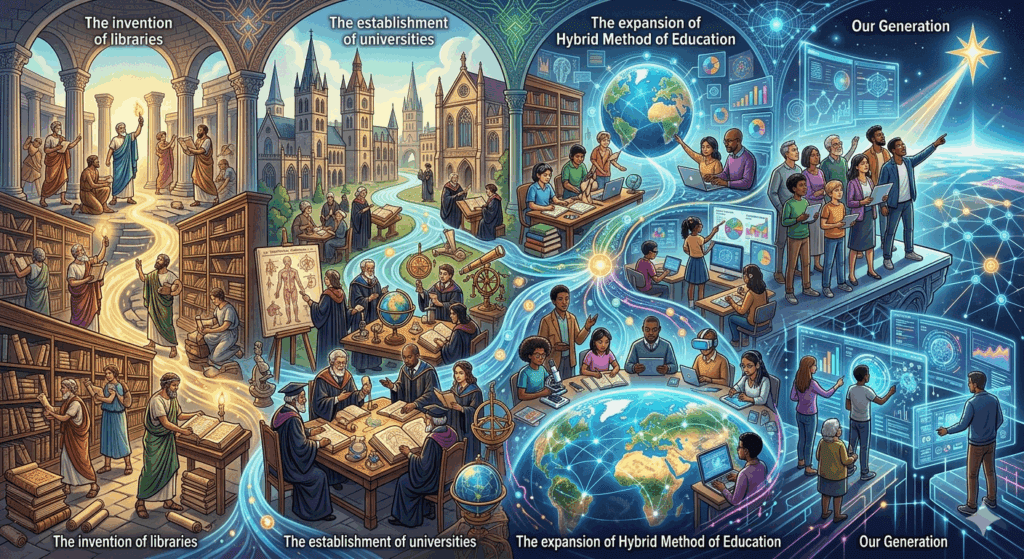
Libraries once illuminated humanity’s intellectual horizons. Universities later became the crucibles where science, philosophy, and innovation reshaped the world.
Many of these institutions exist today because visionary philanthropists believed in a profound truth:
The most powerful investment humanity can make is the investment in knowledge.
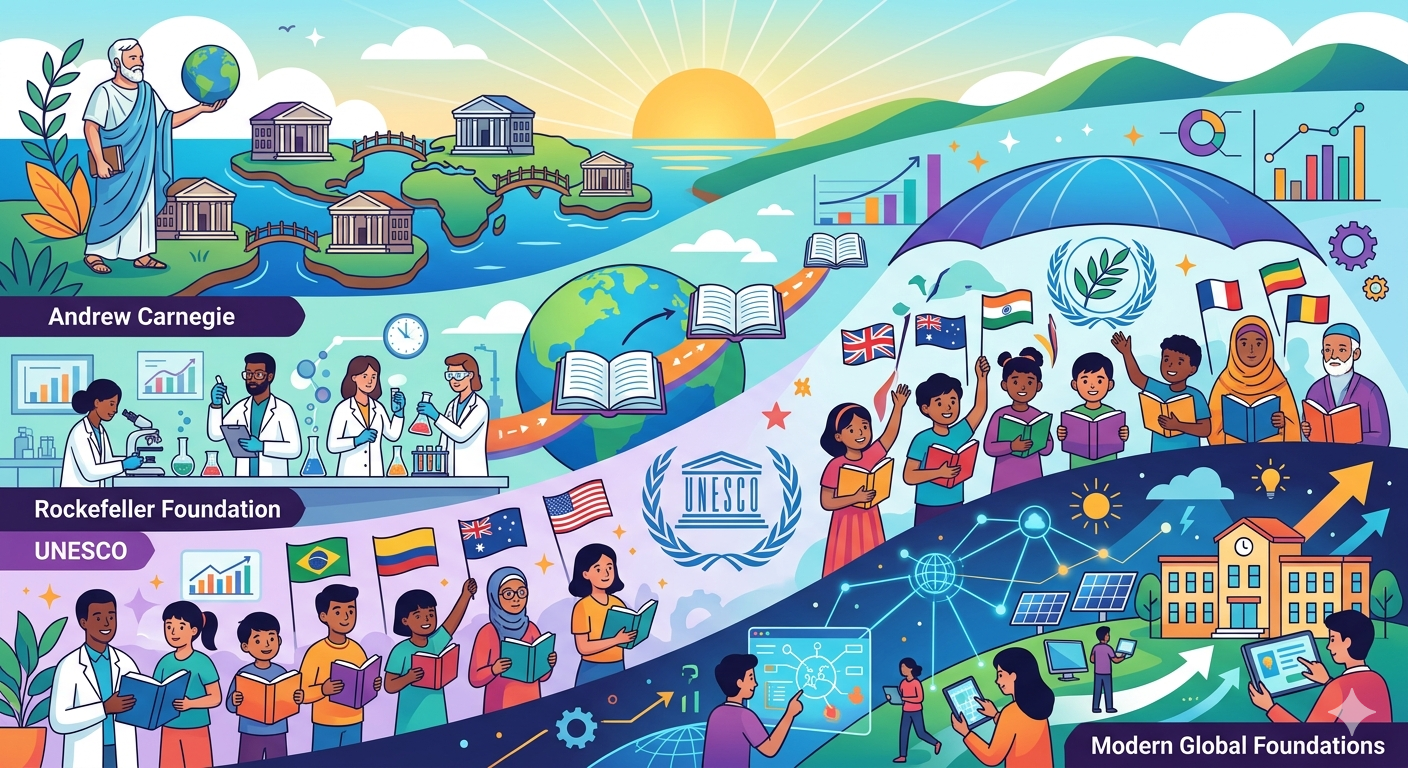
Built libraries across nations.
Invested in scientific research and global education.
Advanced the universal idea that education is a human right.
Continue this legacy by expanding educational access.
Today humanity stands at another such moment. A moment where the future of civilization itself will be shaped by how effectively we expand access to knowledge.
The twenty-first century has transformed knowledge into the most valuable resource shaping human progress. Nations that educate their people lead the world in innovation. Societies that fail to modernize their learning systems face widening inequality and lost opportunity.
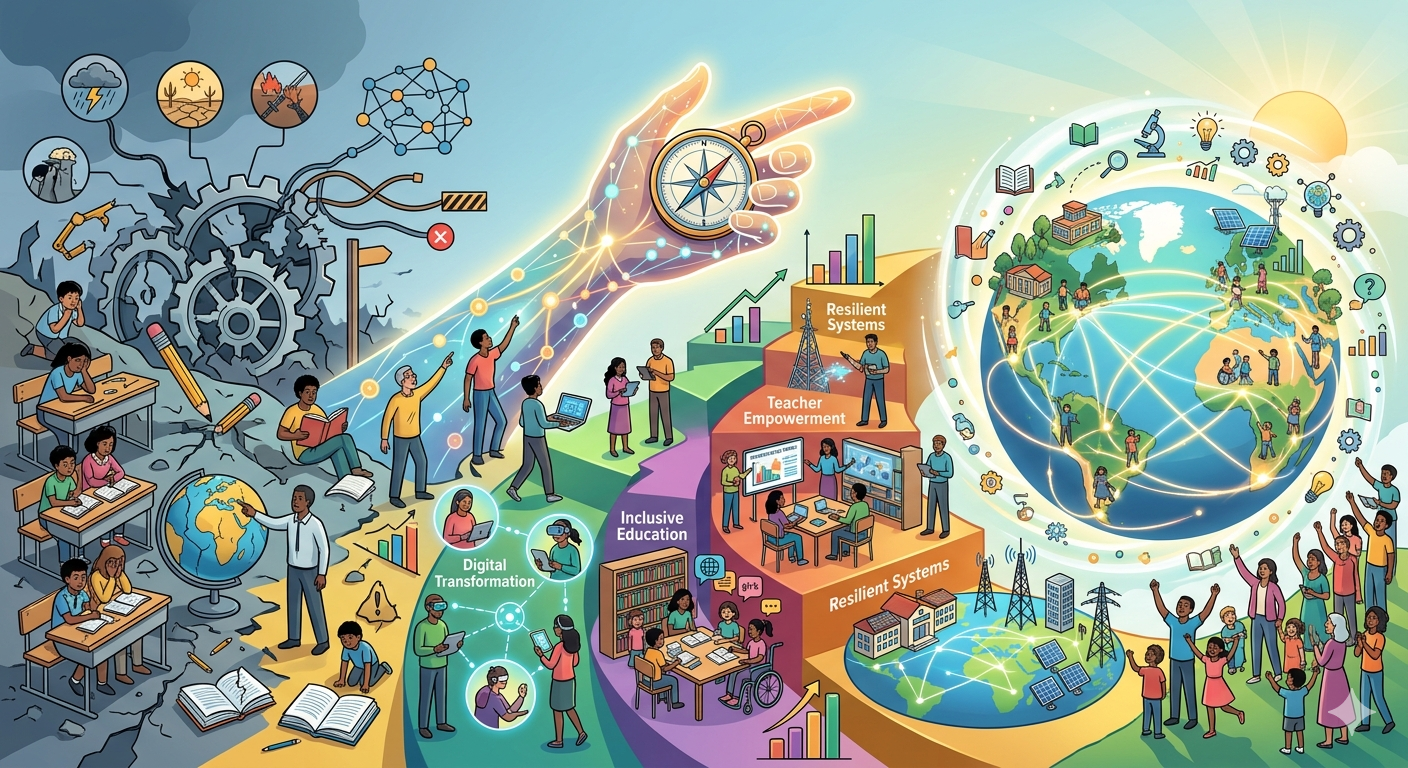
Yet a troubling paradox defines our time. Knowledge has never been more abundant. Access to knowledge has never been more unequal.
Across the world: Millions of students study in institutions without digital learning infrastructure. Educators lack access to modern pedagogical tools. Schools struggle to transition from traditional classrooms to modern learning ecosystems. Brilliant young minds remain limited by geography, infrastructure, and economic barriers.
This widening knowledge divide represents one of the greatest challenges facing humanity.
For the first time in history, however, humanity also possesses the tools to solve this problem. Digital connectivity. Learning platforms. Global academic networks. Technology has created the possibility of something never before achievable: A planetary ecosystem of knowledge.
Yet technology alone cannot produce transformation. Transformation requires: Vision, Leadership, Institutional collaboration, Philanthropic courage.
Recognising this historic opportunity, the Indgiants Association of Educators and Professional Trainers (IAEPT) in association with Indgiants Pvt. Ltd. has launched an ambitious global initiative designed to expand Hybrid Method of Education access across communities and institutions.
This initiative is known as:
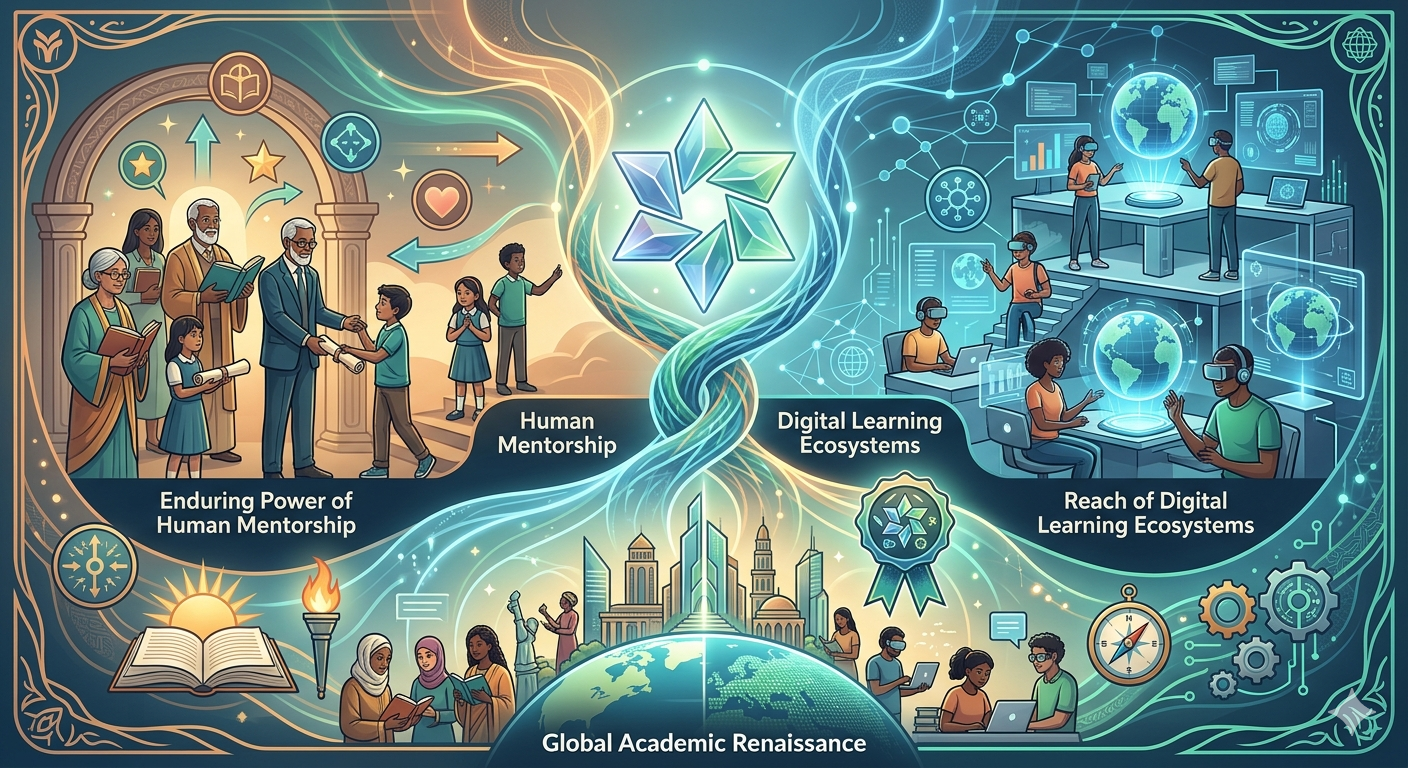
A visionary Hybrid Method of Education movement centered on the Hybrid Method of Education, designed to combine the enduring power of human mentorship with the reach of digital learning ecosystems.
This initiative represents the foundation of what we describe as the Global Academic Renaissance.
A renaissance that seeks to restore humanity’s commitment to knowledge while harnessing the transformative power of modern technology.
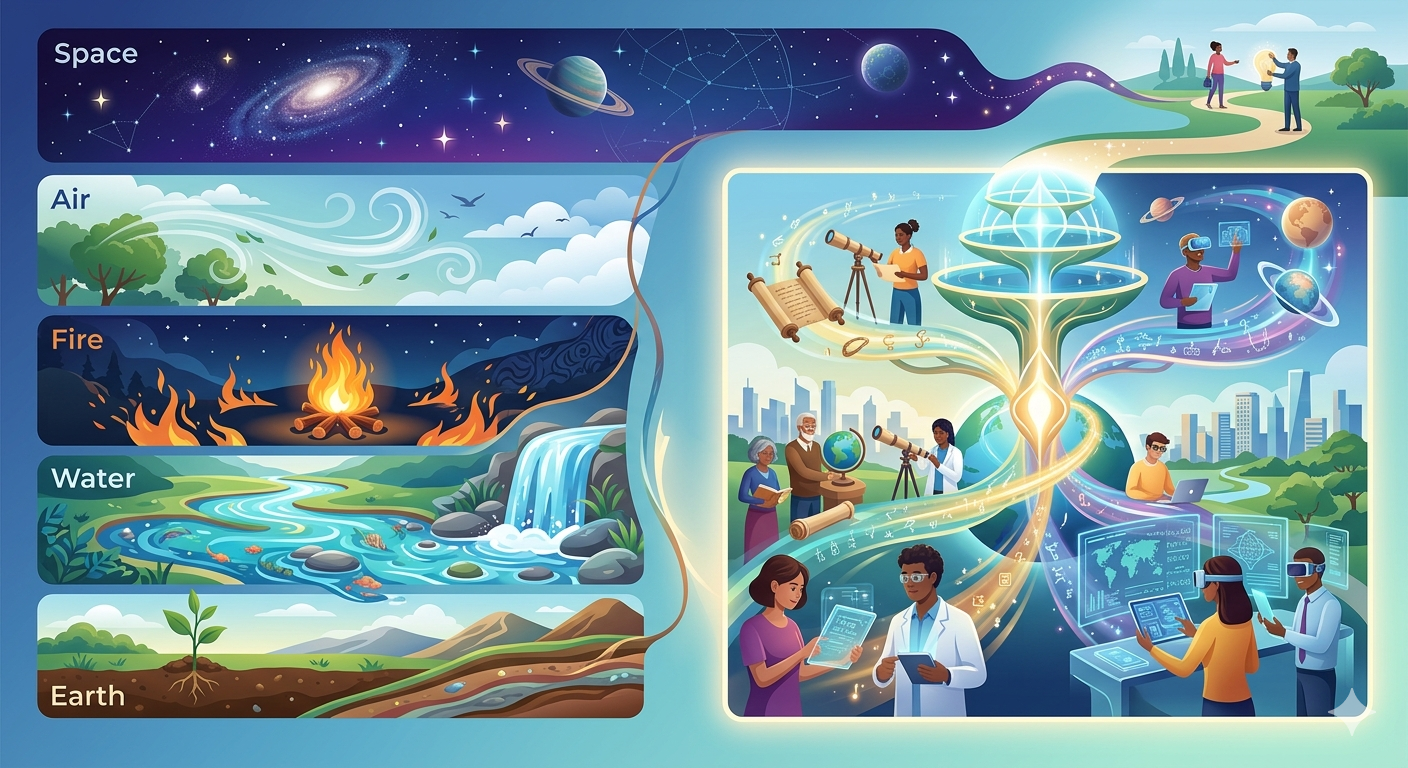
Across cultures and civilizations, humanity has long described the universe through the language of elemental forces. Ancient philosophical traditions recognised five fundamental elements that sustain the natural world:
These elements sustain physical existence.
Yet the rise of civilization revealed another force equally powerful. A force that does not shape mountains or rivers. It shapes minds.
It transforms curiosity into discovery. It converts knowledge into innovation. It enables societies to evolve.
That force is Hybrid Method of Education.
Every scientific discovery. Every technological breakthrough. Every cultural renaissance. All have emerged from the expansion of knowledge.
When knowledge flourishes: Societies flourish.
When knowledge stagnates: Civilizations falter.
Today the knowledge age reveals a profound insight: Hybrid Method of Education is the Sixth Element of human civilization.
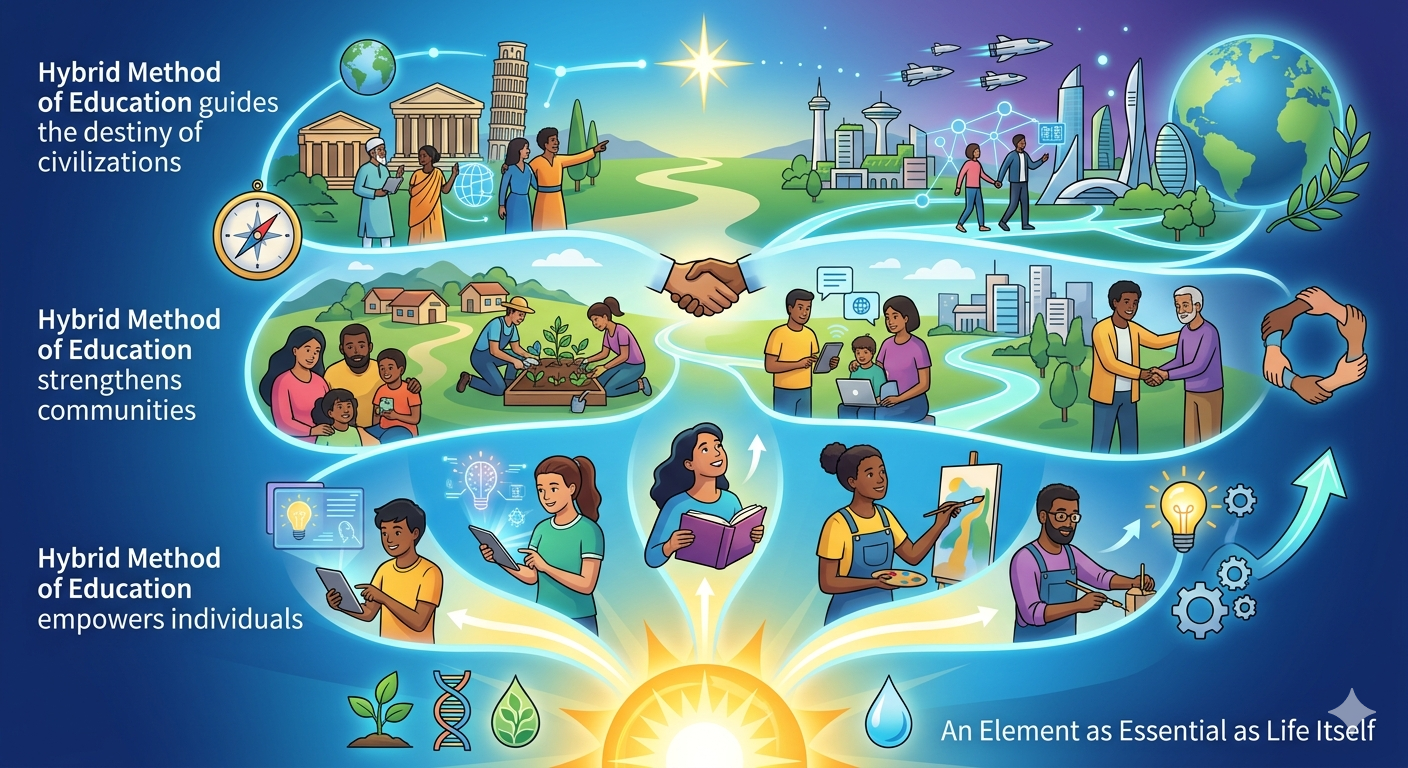
An element as essential to humanity’s future as the natural forces that sustain life.
The Sixth Element Initiative therefore proposes a transformative idea: Just as societies built roads to connect cities and communication networks to connect nations, the twenty-first century must build learning networks that connect minds across the planet.
Hybrid Method of Education must evolve from isolated institutional systems into a global infrastructure of knowledge. This transformation requires a new architecture of learning. That architecture is the Hybrid Method of Education.
Hybrid Method of Education has always been fundamentally human. Teachers mentor students. Students engage in dialogue with knowledge. Institutions cultivate intellectual communities.
The challenge of the digital age is not to replace these traditions. The challenge is to extend them.
The Hybrid Method of Education integrates two powerful forces: Human mentorship + Digital learning ecosystems
Within this model: Educators remain the intellectual guides of learning.
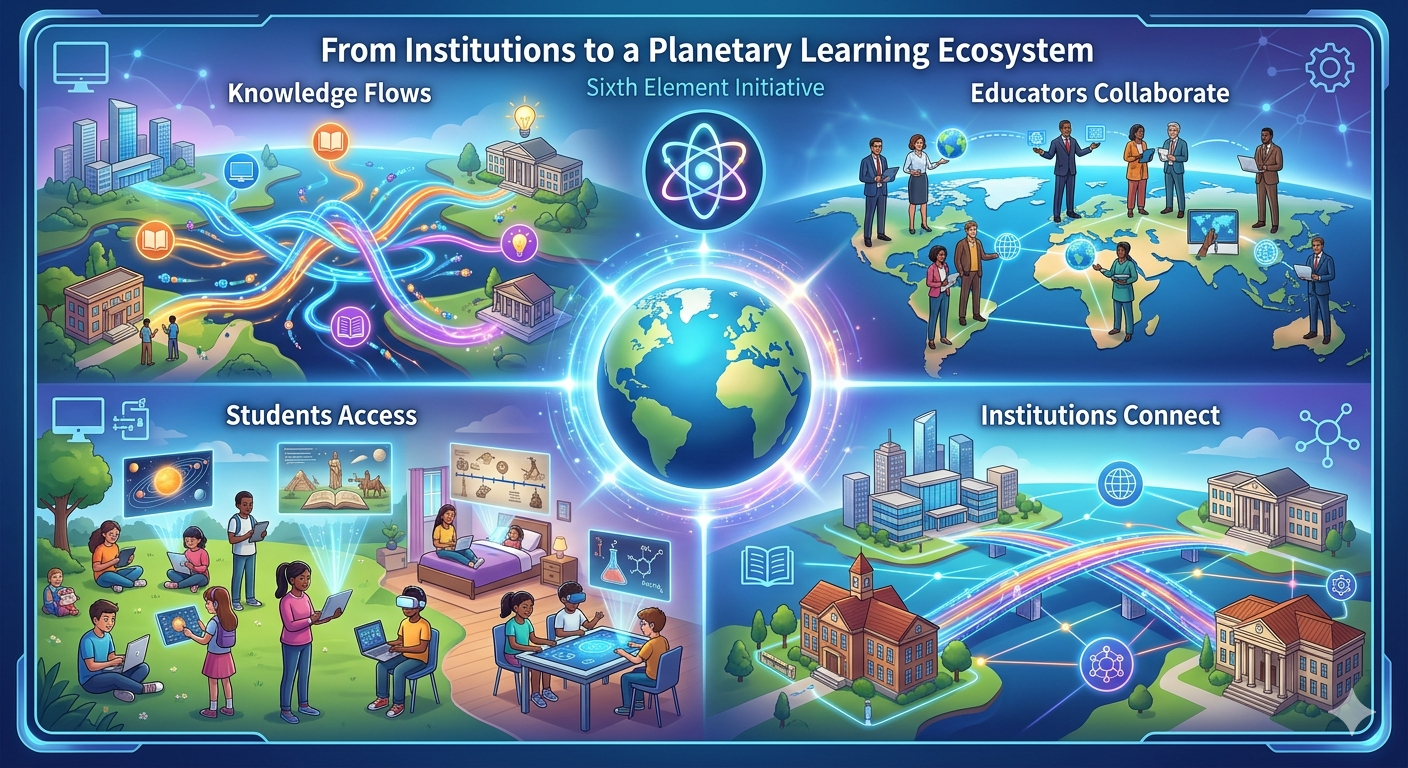
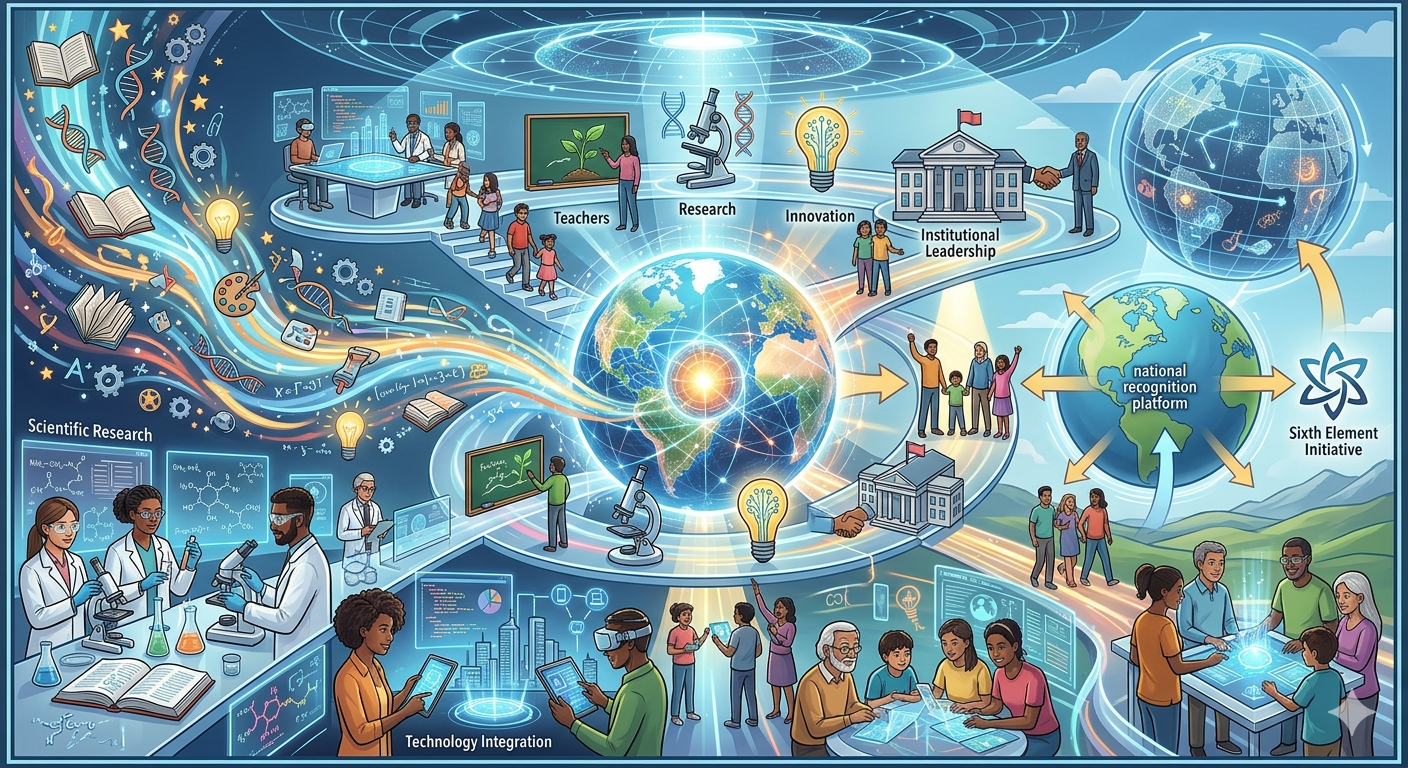
The Sixth Element Initiative envisions a future where Hybrid Method of Education evolves into a planetary learning ecosystem.
Knowledge flows across institutions and communities.
Educators collaborate across borders.
Students access global learning resources.
Institutions become interconnected centres of knowledge exchange.
This vision is described as The Learning Planet.
A Learning Planet is not defined by technology alone. It is defined by the democratisation of knowledge.
In such a world:
- Every institution becomes part of a global network of learning.
- Every educator becomes a contributor to intellectual progress.
- Every student gains the opportunity to access knowledge beyond traditional boundaries.
The Learning Planet represents the natural evolution of Hybrid Method of Education in the digital age.
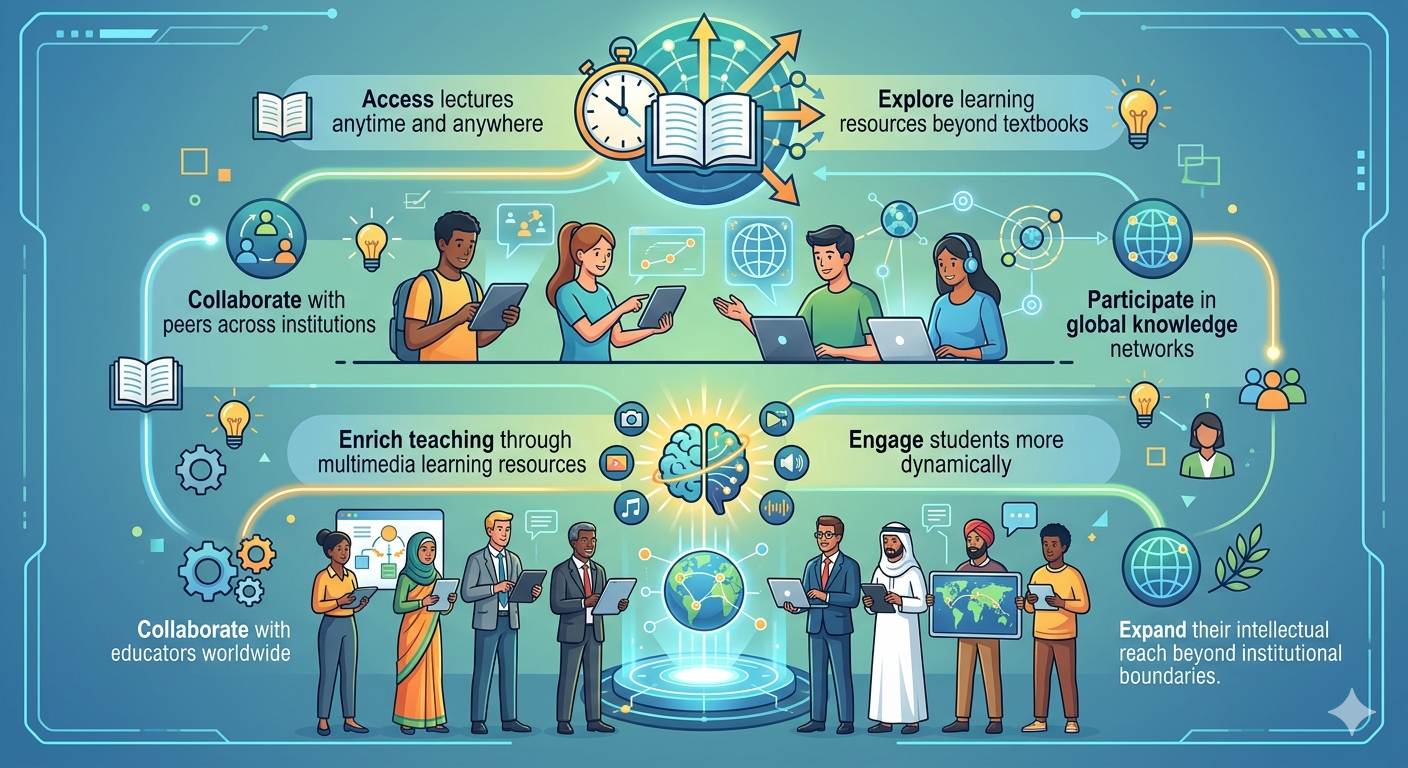
Digital platforms extend the reach of mentorship beyond the physical classroom.
Students gain the ability to:
- Access lectures anytime and anywhere
- Explore learning resources beyond textbooks
- Collaborate with peers across institutions
- Participate in global knowledge networks
Teachers gain tools that allow them to:
- Enrich teaching through multimedia learning resources
- Engage students more dynamically
- Collaborate with educators worldwide
- Expand their intellectual reach beyond institutional boundaries
Institutions gain the ability to evolve into hybrid learning ecosystems. Such ecosystems combine the strengths of traditional academic environments with the connectivity of digital learning systems.
The result is Hybrid Method of Education architecture that is:
Learning reaches students regardless of geography.
Institutions can serve larger communities.
Hybrid Method of Education continues during disruptions.
Educators and institutions exchange knowledge globally.
Hybrid education therefore represents the most practical pathway toward expanding access to knowledge at scale.
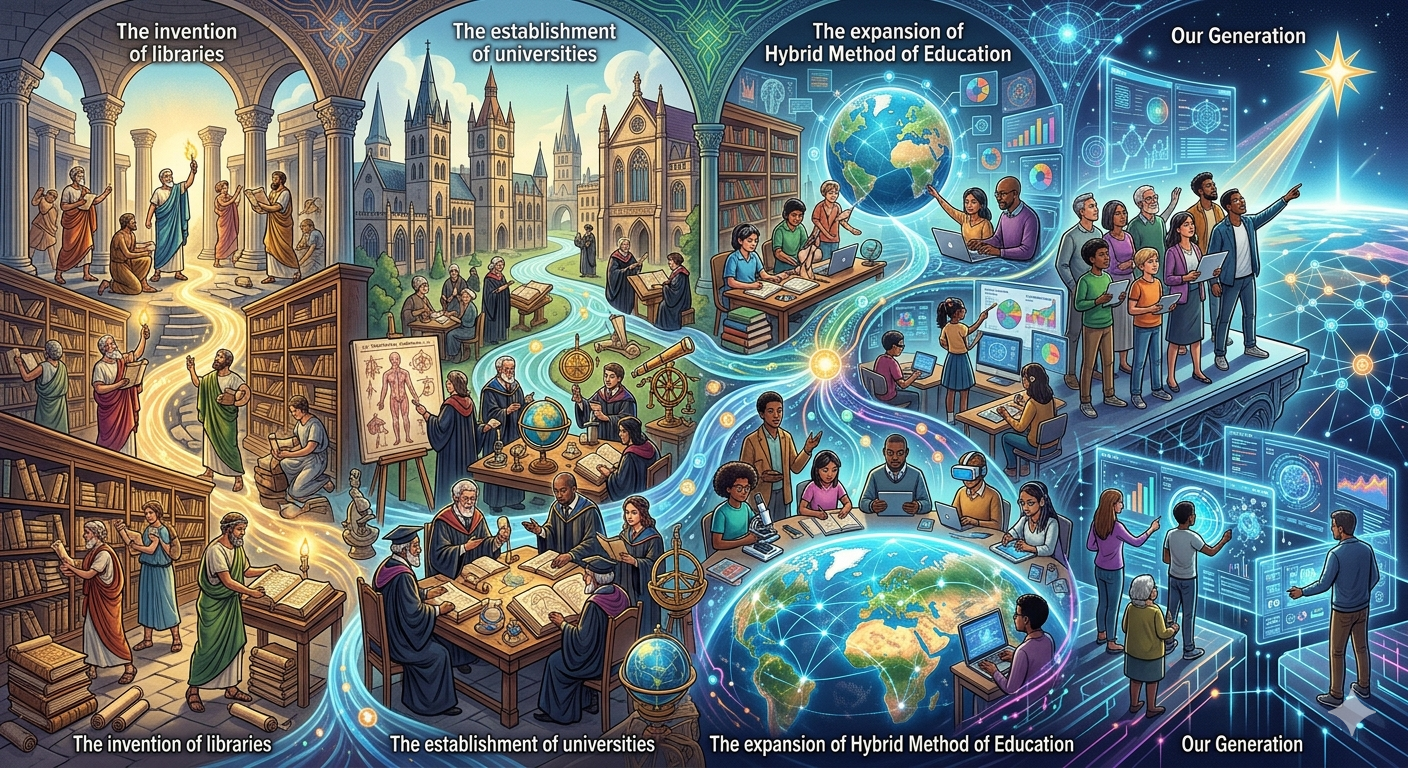
Few generations are presented with opportunities to reshape the infrastructure of knowledge itself.
The invention of libraries changed civilizations.
The establishment of universities transformed intellectual life.
The expansion of Hybrid Method of Education reshaped nations.
We now stand before another historic transformation.
We possess the technological capacity to ensure that knowledge can reach every learner on Earth. What remains is the collective will to act.
The Sixth Element Initiative therefore invites the global philanthropic community to participate in building the educational infrastructure required for the century ahead.
The decisions made today will determine whether the future of education remains limited by geography and infrastructure — or evolves into a global learning ecosystem capable of empowering billions of minds.
The Sixth Element Initiative offers a pathway toward that transformation. It invites educators, institutions, philanthropic foundations, and visionary partners to participate in building a world where knowledge flows freely and Hybrid Method of Education becomes the foundation of civilization’s future.
Because when Hybrid Method of Education expands, humanity advances.