




Every technological revolution in education eventually confronts the same truth.
But educators transform information into understanding.
But teachers cultivate curiosity.
But leaders inspire movements.
For this reason, the Sixth Element Initiative recognises a fundamental principle:
Educational transformation must be human-centered.
Digital infrastructure provides the engine. But educators, institutions, and leadership form the living architecture of the Global Academic Renaissance.
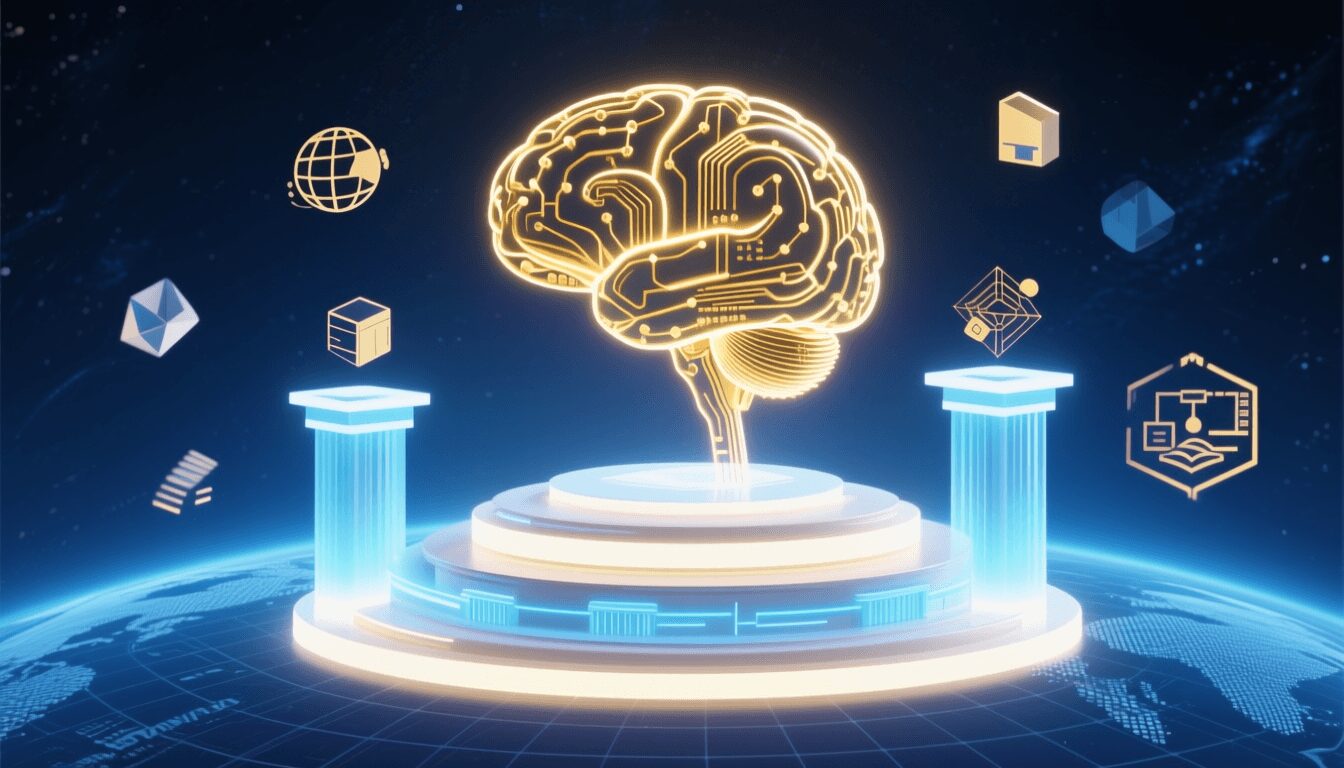

Institutional digital transformation platform.

Hybrid learning environment.
Global academic collaboration network.

Digital knowledge repository and learning platform.
Communication and human development platform.
Together these pillars ensure that the transition toward hybrid learning ecosystems remains grounded in academic integrity, intellectual leadership, and educational purpose.
Every educational system ultimately rests upon the dedication of teachers. Across centuries, teachers have served as guides of intellectual discovery, mentors of future leaders, and custodians of knowledge traditions.
The Sixth Element Initiative therefore places educator empowerment at the heart of educational transformation. Technology alone cannot transform education. Educators must possess the confidence, skills, and institutional support required to integrate new learning frameworks into their teaching practices. Without such empowerment, digital platforms risk becoming underutilised tools rather than catalysts for intellectual progress.
To address this challenge, the initiative establishes a comprehensive Educator Empowerment Architecture designed to prepare teachers for the hybrid learning environments of the knowledge age.
This framework focuses on three strategic objectives:
Educators must develop the ability to combine traditional teaching with digital learning tools. Faculty development programs therefore introduce teachers to hybrid teaching methodologies, enabling them to integrate digital platforms into classroom instruction effectively.
Training programs focus on: hybrid lesson design, digital learning resource integration, student engagement strategies, technology supported assessment methods.
Through this training, educators gain the ability to design learning experiences that are both technologically advanced and intellectually rigorous.
Teaching has historically been a demanding profession often practised in isolation within individual institutions. The Sixth Element Initiative addresses this challenge by connecting educators through collaborative networks such as LecturersClub and ACE IAEPT academic forums.
Through these networks, educators can: exchange teaching methodologies, collaborate on academic research, discuss pedagogical innovations, share learning resources.
This collaborative culture transforms teaching from an isolated activity into a shared intellectual movement. Educators become participants in a global community of knowledge exchange.
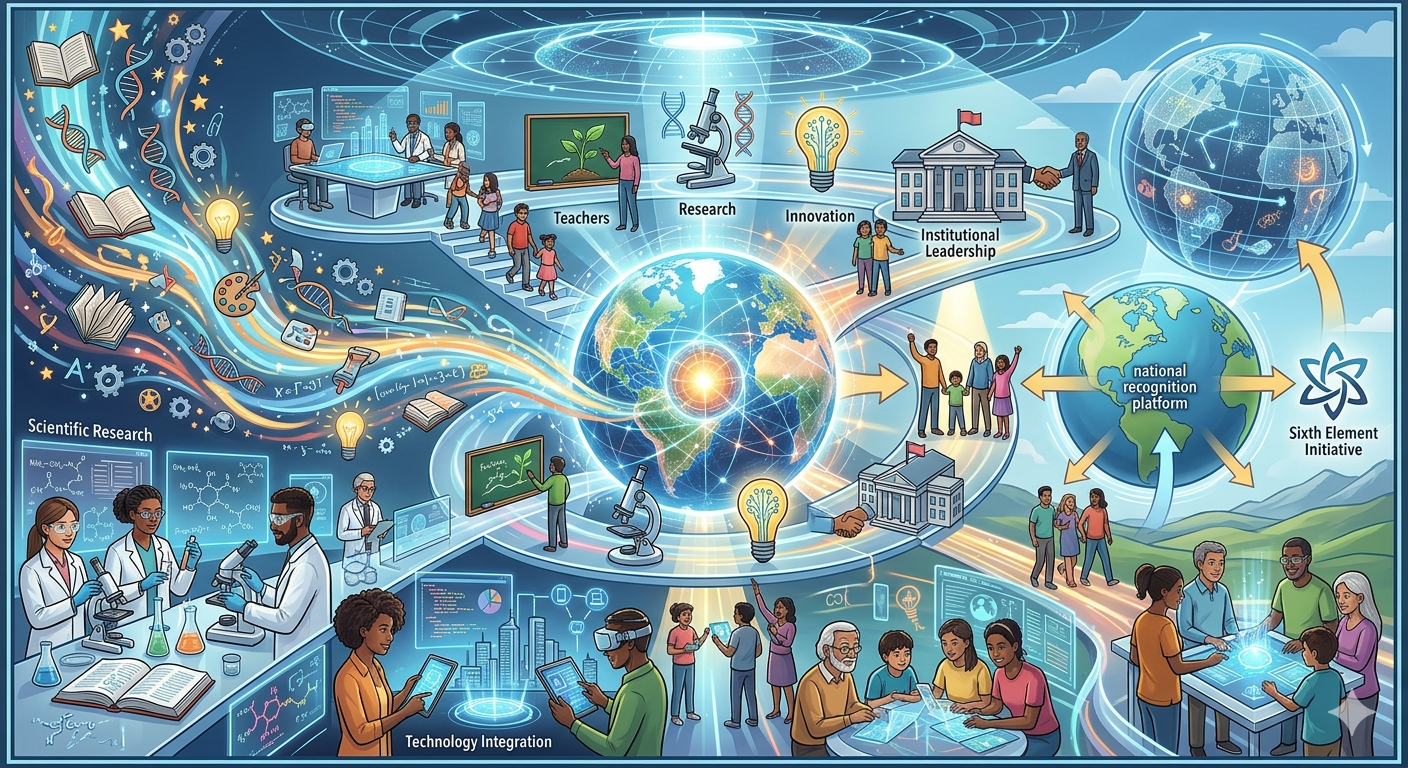
Educational transformation requires role models. Teachers who demonstrate excellence in teaching, research, and institutional leadership must be recognised and empowered as leaders within the academic community.
The Sixth Element Initiative therefore establishes a global recognition platform through the IAEPT Global Excellence Awards. These awards celebrate educators whose work strengthens the intellectual foundations of society.
Recognition serves an important purpose. It inspires educators to pursue innovation, encourages professional excellence, and elevates the social status of teaching as a leadership profession.
Recognising excellence in educators is only the beginning. The Sixth Element Initiative transforms recognised educators into leaders of institutional transformation through the creation of the Global Academic Leadership Network.
This network forms the intellectual leadership engine of the Global Academic Renaissance.
Educators honoured through the IAEPT Global Excellence Awards become Ambassadors of the Global Academic Renaissance. Their role extends far beyond recognition. They become the catalysts of educational transformation.

Ambassadors serve as the guiding voices of the movement toward hybrid education.
Their responsibilities include:
- Mentoring educators adopting hybrid teaching practices
- Guiding institutions transitioning toward hybrid learning ecosystems
- Promoting modern pedagogical frameworks
- Strengthening collaboration across academic institutions
- Advocating expanded access to knowledge
Through seminars, workshops, and academic outreach programs, ambassadors introduce institutions to the possibilities created by hybrid learning systems. Their credibility within academic communities provides the trust necessary for institutional transformation.
When respected educators advocate for innovation, their message carries weight. Institutional leaders gain confidence that hybrid learning strengthens education rather than replacing its traditions. This trust accelerates the adoption of modern learning ecosystems.

Educational transformation must ultimately occur within institutions. Schools, colleges, and universities form the environments where knowledge is transmitted across generations. The Sixth Element Initiative therefore provides a structured pathway through which institutions can modernise their educational architecture.
This pathway includes four stages.
Build institutional understanding and buy-in
Upskill educators for new pedagogies
Deploy hybrid learning systems and tools
Embed practices into institutional processes

Once hybrid learning systems are deployed, institutions gradually integrate them into their academic culture. Teachers refine hybrid teaching methodologies. Students engage with learning resources beyond traditional classrooms. Institutions connect with global academic networks. The institution evolves into a Hybrid Temple of Learning.
When institutions adopt hybrid learning systems, they no longer operate in isolation. They become participants in a broader academic ecosystem. Educators collaborate across institutions. Students participate in shared learning communities. Institutions exchange knowledge resources and pedagogical innovations.
This transformation creates the foundation for the Learning Planet. A world in which knowledge circulates continuously across academic networks. A world in which institutions serve both their local communities and the global intellectual community.

Philanthropic leadership has historically played a crucial role in expanding access to Hybrid Method of Education. Many of the world’s most influential educational institutions were built through the vision of individuals who understood the power of knowledge.
The Sixth Element Initiative extends this legacy. It invites visionary philanthropists to participate in building the Hybrid Method of Education infrastructure required for the twenty first century.
Supporting this initiative enables donors to contribute to:
Most importantly, it helps establish Hybrid Method of Education as the Sixth Element sustaining civilization.

The combination of educator empowerment, institutional transformation, and academic leadership creates powerful momentum.
This momentum gradually evolves into a global movement for educational transformation. The Global Academic Renaissance begins to unfold.
Hybrid Method of Education transformation must not only begin successfully. It must also become self-sustaining.
Philanthropic investment can ignite the initial transformation. But long-term sustainability requires a model through which institutions themselves contribute to the ongoing expansion of the ecosystem.
The Sixth Element Initiative therefore includes a strategic pathway toward financial sustainability through institutional participation and ecosystem renewal programs.