



Humanity today stands inside the most extraordinary knowledge revolution in history. Information travels across continents in milliseconds. Scientific discovery accelerates at unprecedented speed. Digital connectivity links billions of people across the globe.
And yet, beneath this remarkable progress lies a profound paradox:
Knowledge has never been more abundant. Access to knowledge has never been more unequal.
Across continents:
- Millions of schools lack digital learning infrastructure.
- Teachers struggle without access to modern pedagogical tools.
- Institutions remain trapped in educational models designed for the twentieth century.
- Students with immense intellectual potential remain disconnected from global knowledge networks.
The consequence of this divide is not merely educational. It is civilizational.
Education determines economic mobility.
Knowledge drives technological innovation.
Learning ecosystems shape national competitiveness.
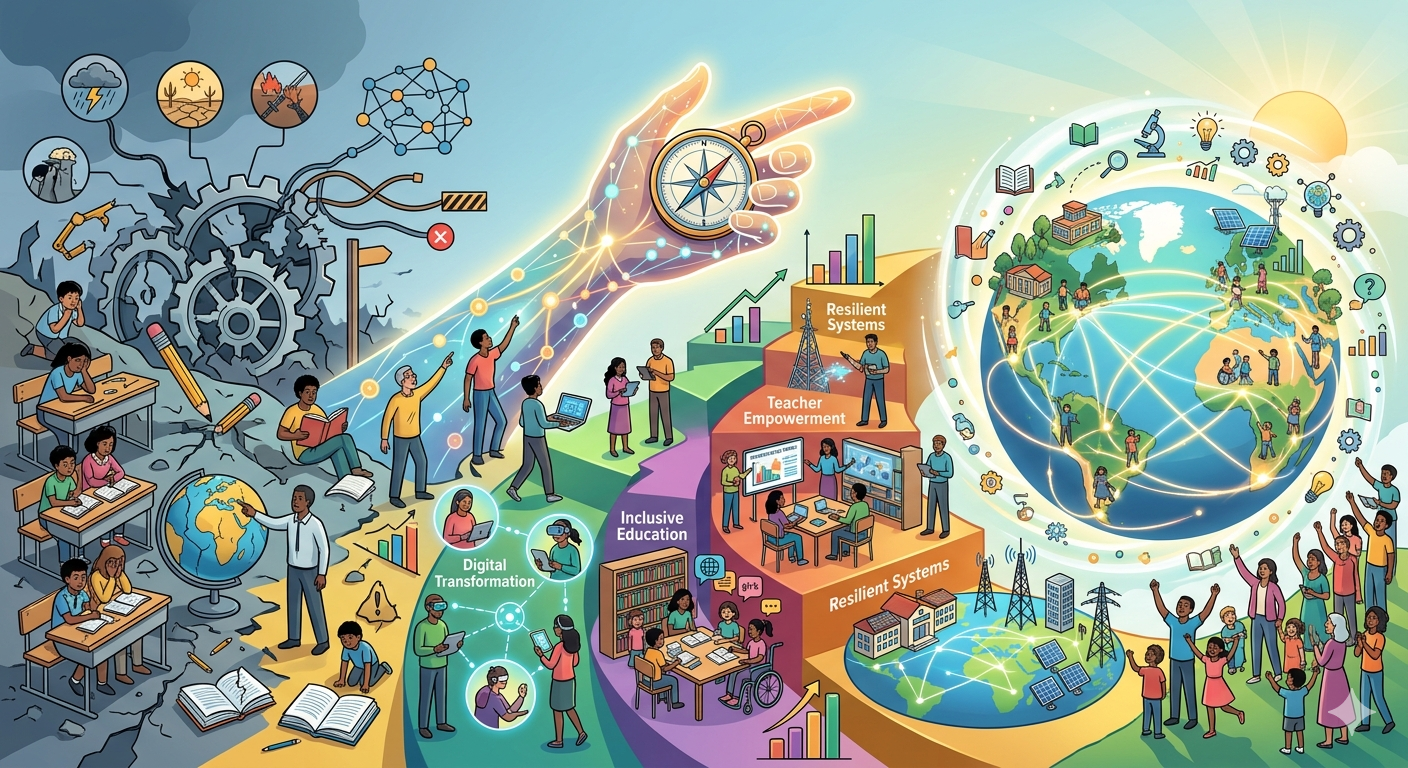
Societies that expand access to Hybrid Method of Education unlock innovation and prosperity. Societies that fail to modernise their Educational Systems risk widening inequality and stagnation. The widening knowledge divide therefore represents one of the defining challenges of our time.
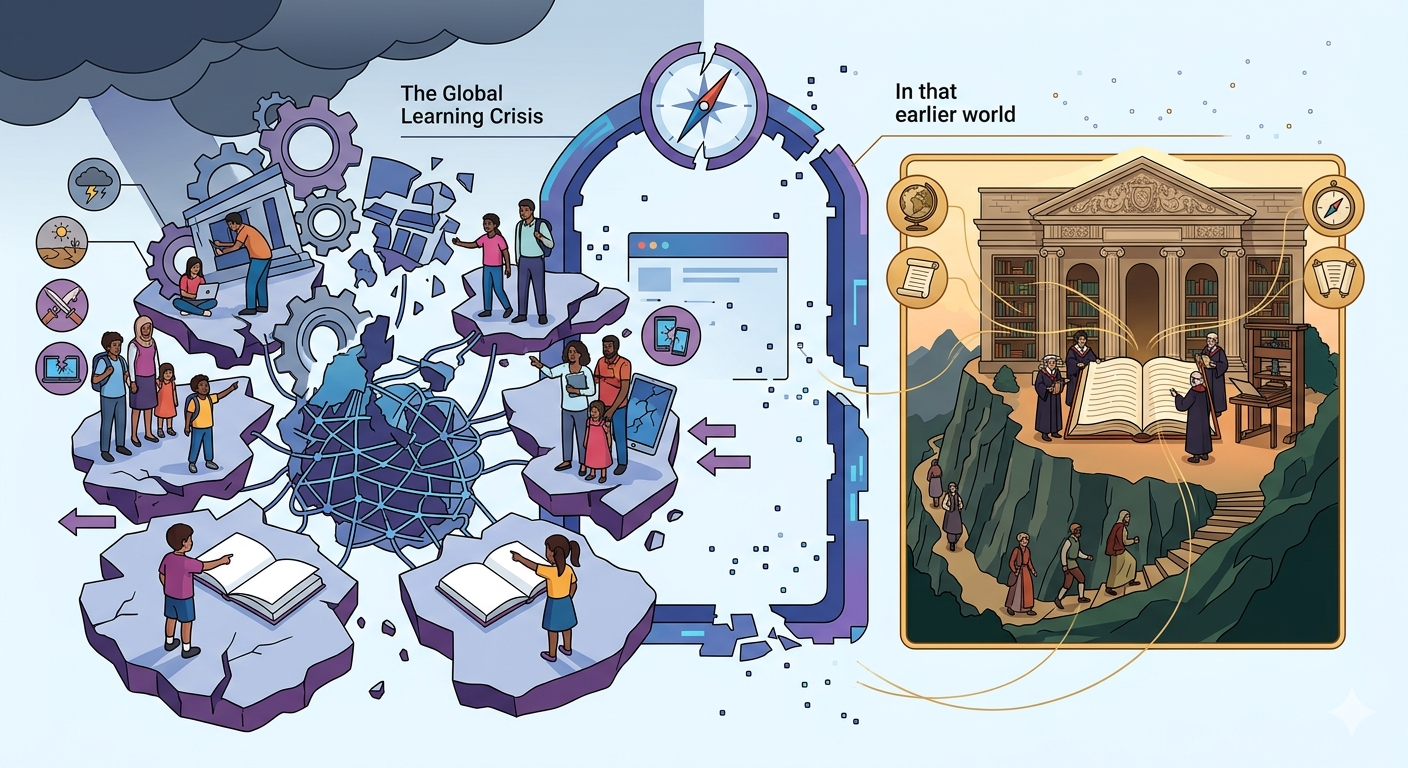
Despite enormous advances in technology, the global education system faces structural limitations.
Traditional educational frameworks were designed for a different era.
In that earlier world:
- Knowledge was scarce.
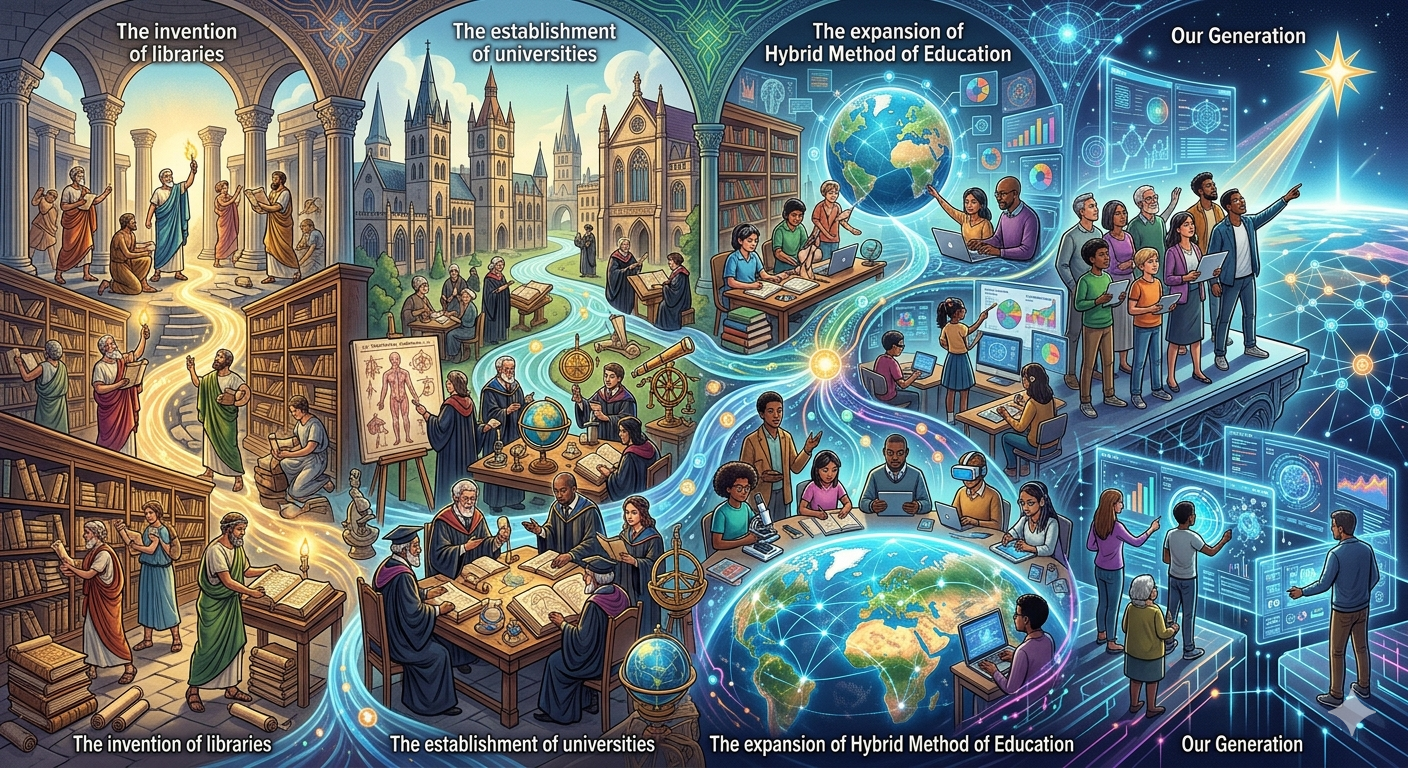
- Libraries were the primary repositories of information.
- Students travelled long distances to reach institutions where knowledge resided.
Today the conditions have changed dramatically. Knowledge itself can travel. Digital technologies now allow lectures, research materials, and learning resources to reach students across continents instantly.
Yet most institutions remain unable to fully harness these possibilities. Many schools and colleges face persistent challenges:
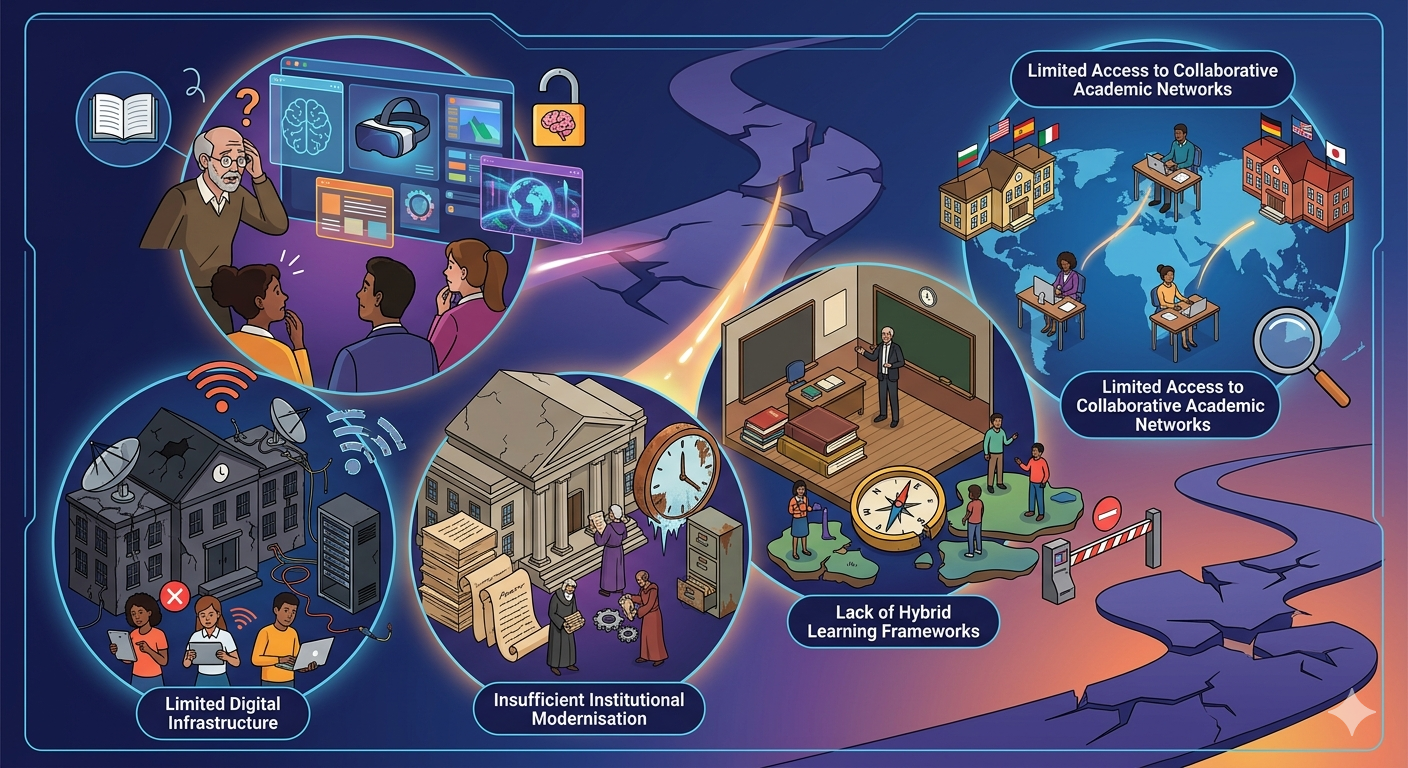
Schools lack the hardware, connectivity, and platforms needed for modern learning.
Many institutions remain anchored to outdated administrative and academic systems.
No structured pathway exists for transitioning from conventional to hybrid education.
Educators work in isolation without access to global knowledge communities.
Teachers lack training in modern, technology-integrated teaching methodologies.
These limitations create a widening gap between institutions that are able to modernise and those that remain constrained by outdated systems.
For millions of students, the result is a lost opportunity. Talent remains undiscovered. Curiosity remains underdeveloped. Potential remains unrealised.
Closing this gap is therefore not simply an educational objective. It is a global developmental imperative.
The same technological revolution that exposed the learning divide also provides the tools required to overcome it. For the first time in human history:
- Knowledge can be delivered anywhere.
- Learning systems can operate across geographical boundaries.
- Educators can collaborate globally.
- Students can access learning resources regardless of location.
These possibilities create the foundation for what the Sixth Element Initiative describes as:
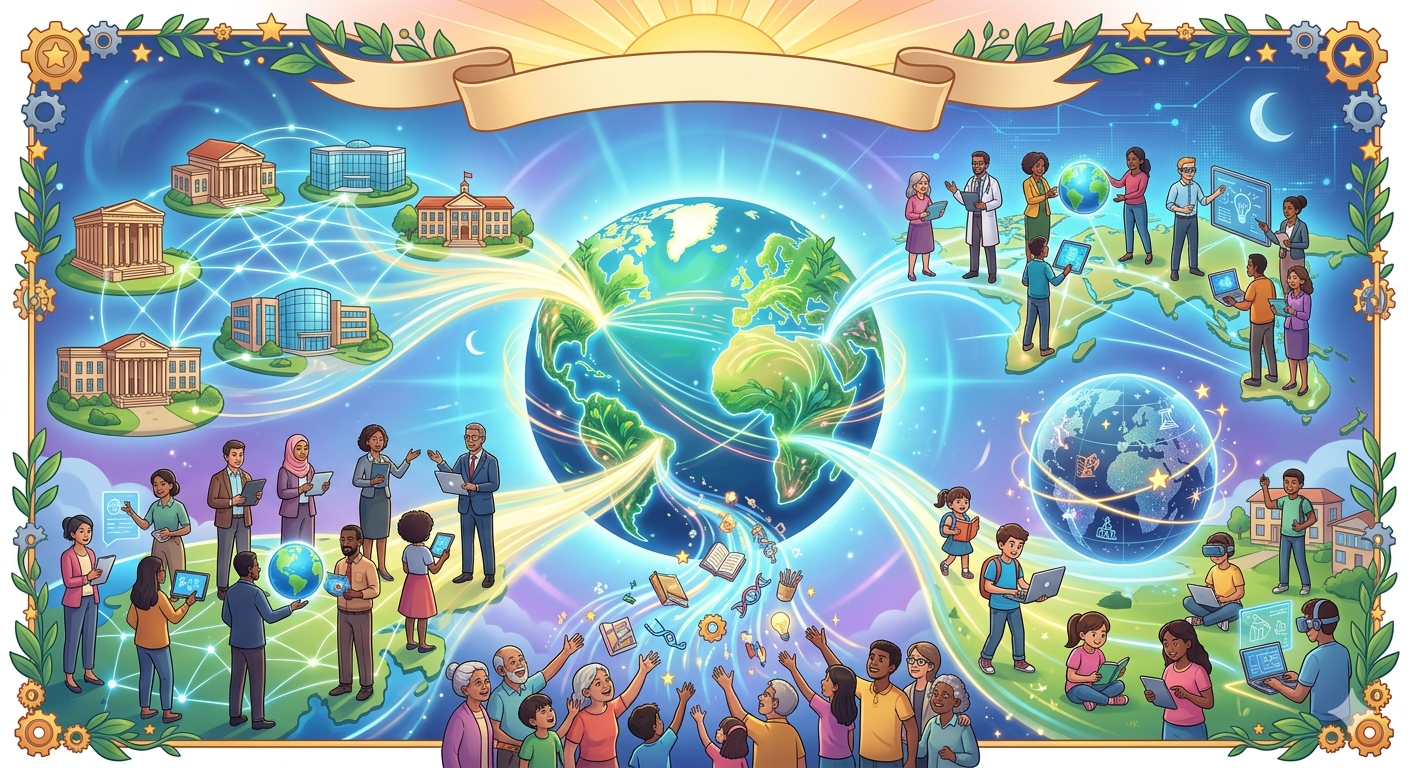
A world where:
- Institutions are connected through global learning ecosystems
- Educators collaborate across borders
- Students access knowledge networks beyond geography
- Learning becomes a lifelong and universal human resource
The Learning Planet represents the natural evolution of Hybrid Method of Education in the twenty-first century. It transforms education from isolated institutional activity into a planetary knowledge system.
But such a transformation cannot occur automatically. It requires:
To begin this transformation, the Sixth Element Initiative launches two strategic programs designed to ignite the Global Academic Renaissance.
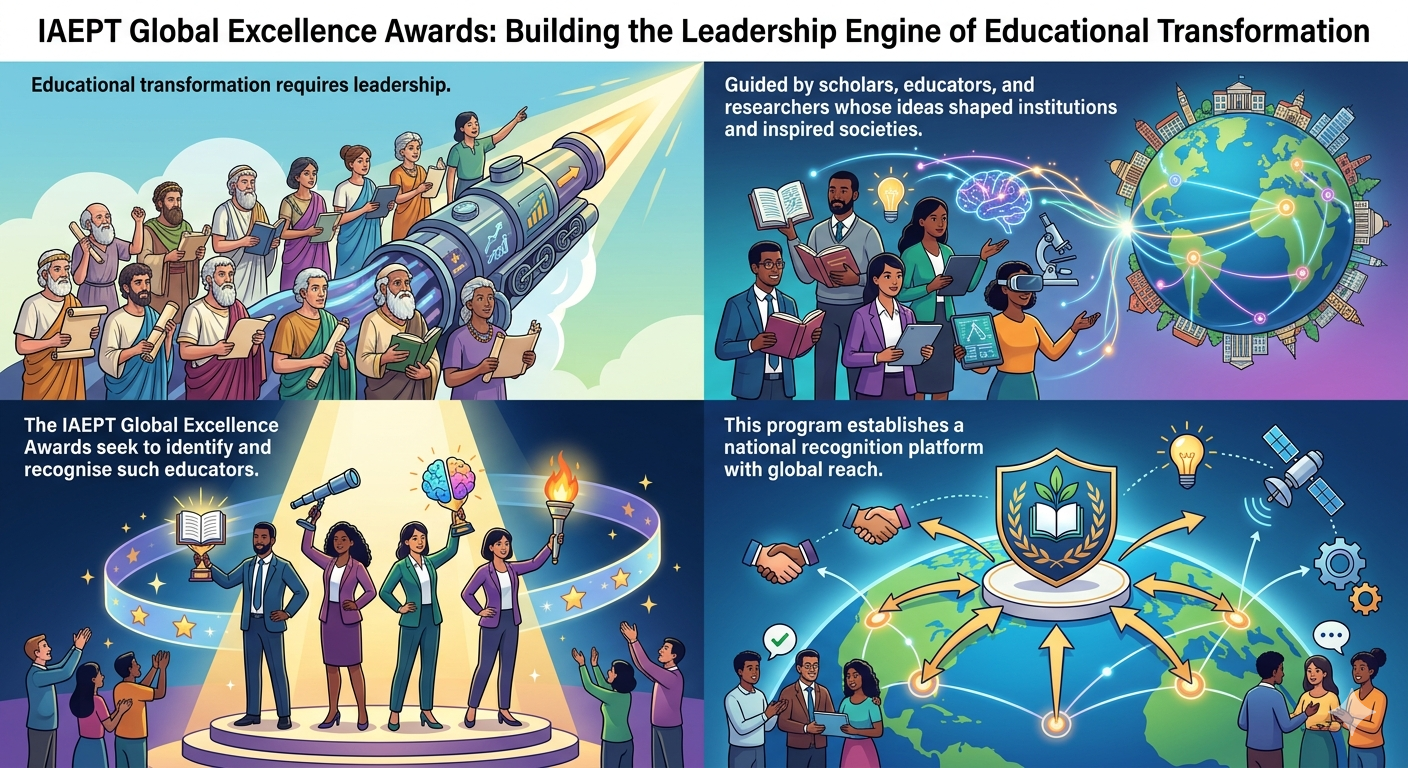
The IAEPT Global Excellence Awards seek to identify and recognise such educators.
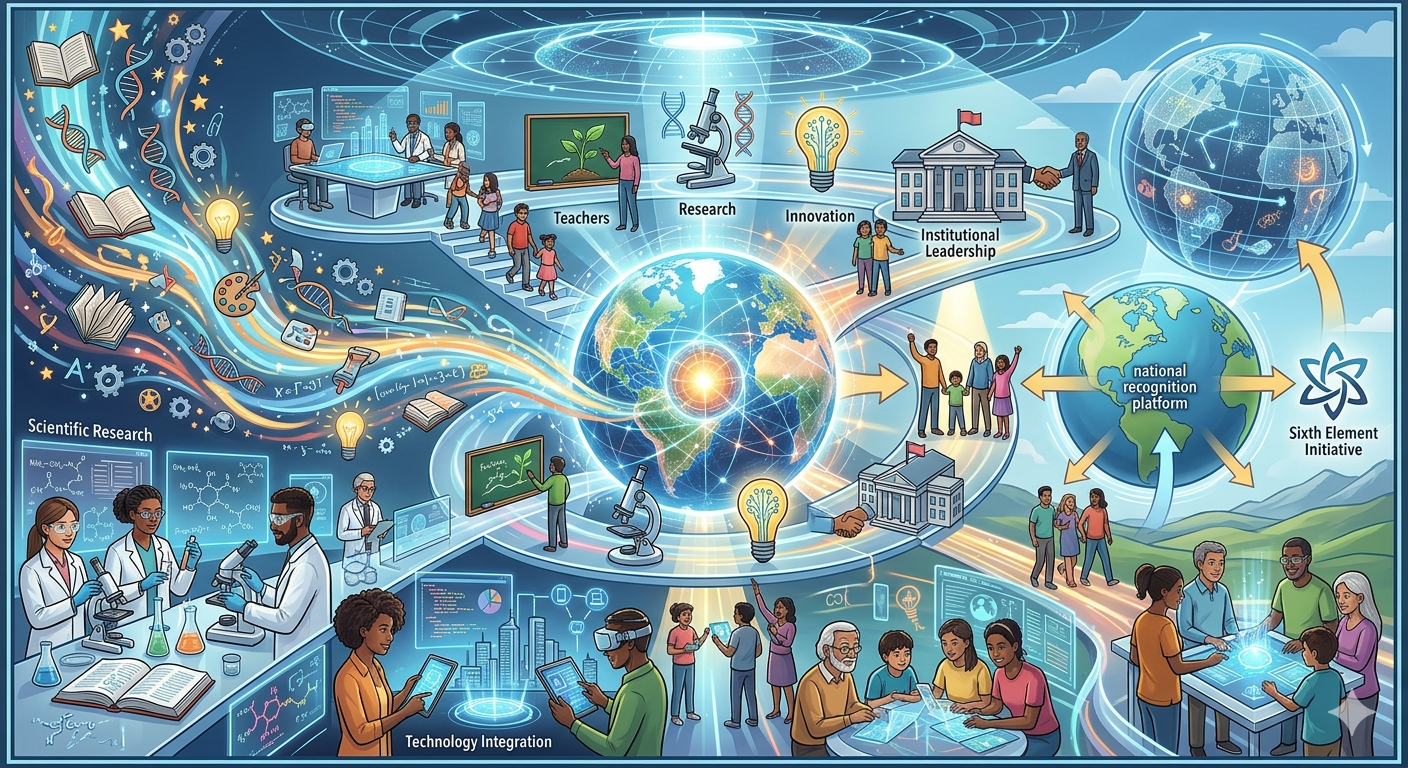
This program establishes a national recognition platform with global reach.
The awards will honour teachers and researchers who have demonstrated excellence in:
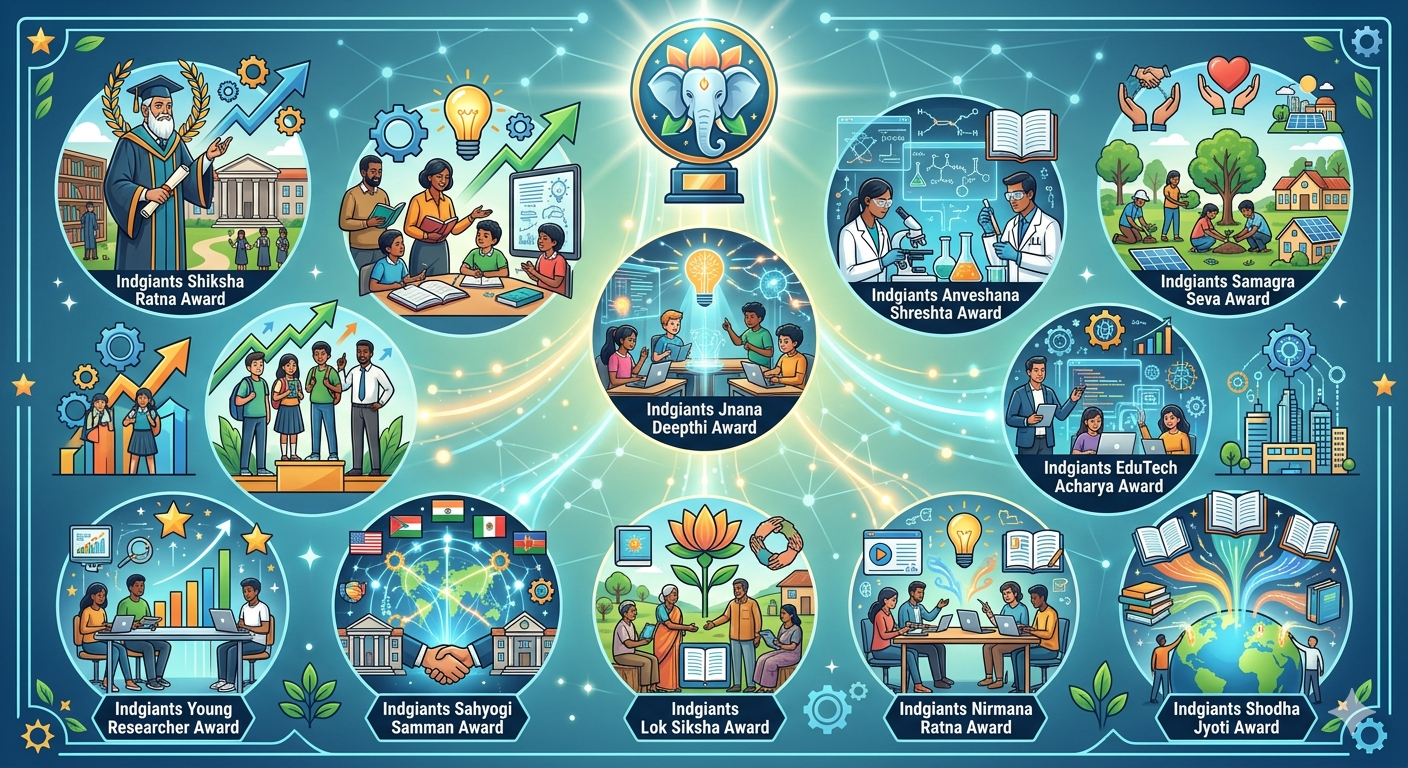
The program will recognise distinguished educators across multiple award categories including the following Distinguished Awards:
Lifetime contribution to education and academic leadership.
Distinguished excellence in teaching and academic mentorship.
Innovative pedagogy illuminating the minds of students.
Outstanding research and academic discovery.
Holistic contribution to the education ecosystem.
Excellence in mentorship and student empowerment.
Leadership in technology-enabled learning and hybrid education.
Emerging excellence in academic research.
Collaborative leadership in institutional development.
Community engagement and grassroots educational impact.
Contribution to curriculum and content development.
Excellence in research publication and knowledge dissemination.
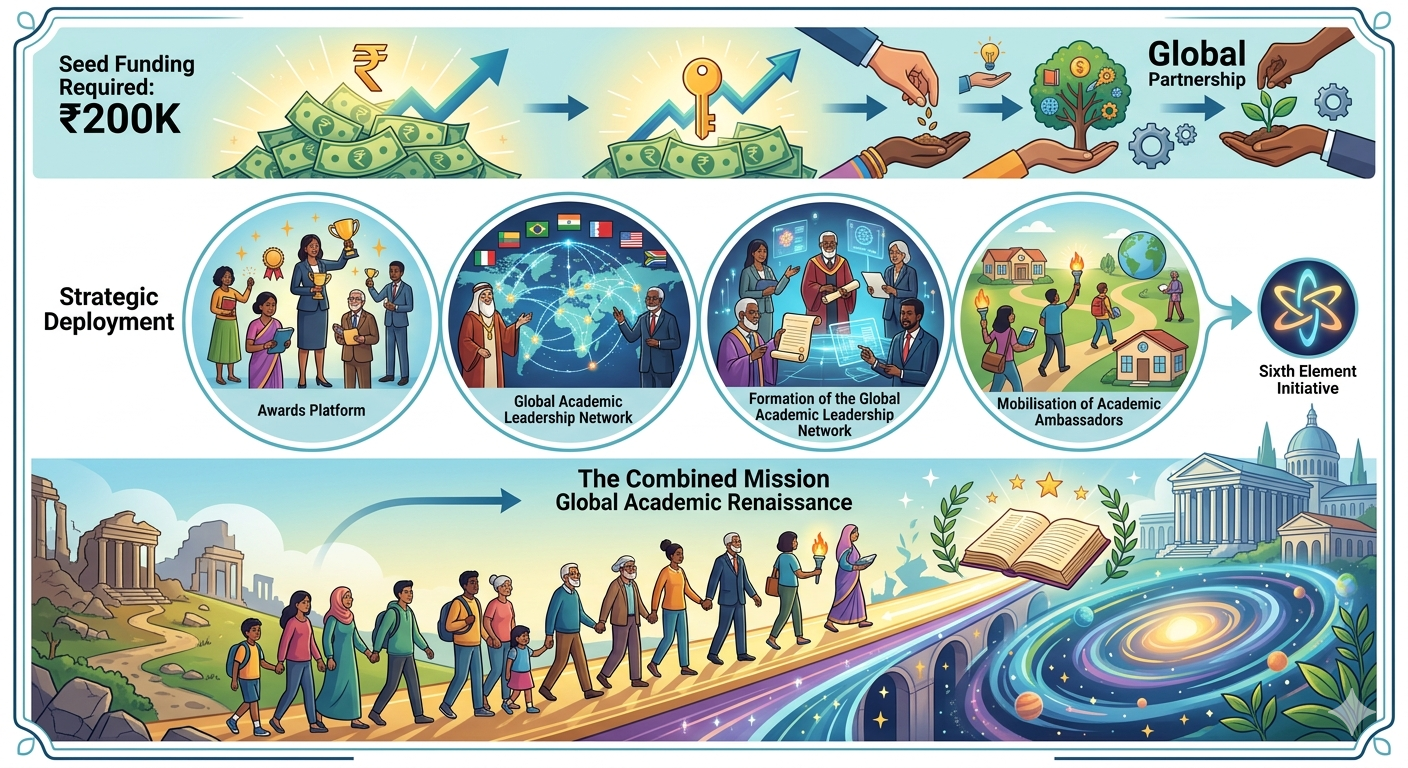
Strategic Deployment
- The establishment of the awards platform
- Recognition of distinguished educators
- Formation of the Global Academic Leadership Network
- Mobilisation of academic ambassadors for the Sixth Element Initiative
Together, these two initiatives form the first operational phase of the Global Academic Renaissance. Support will enable:
- Launch of the IAEPT Global Excellence Awards
- Establishment of the Global Academic Leadership Network
- Recognition of distinguished educators
- Implementation of the Hybrid Method of Education through 'The Sixth Element Initiative' globally
The awards will be conferred during the III Anniversary of IAEPT.
Together these recognitions celebrate educators and researchers whose work strengthens the foundations of knowledge and contributes to the intellectual advancement of society.
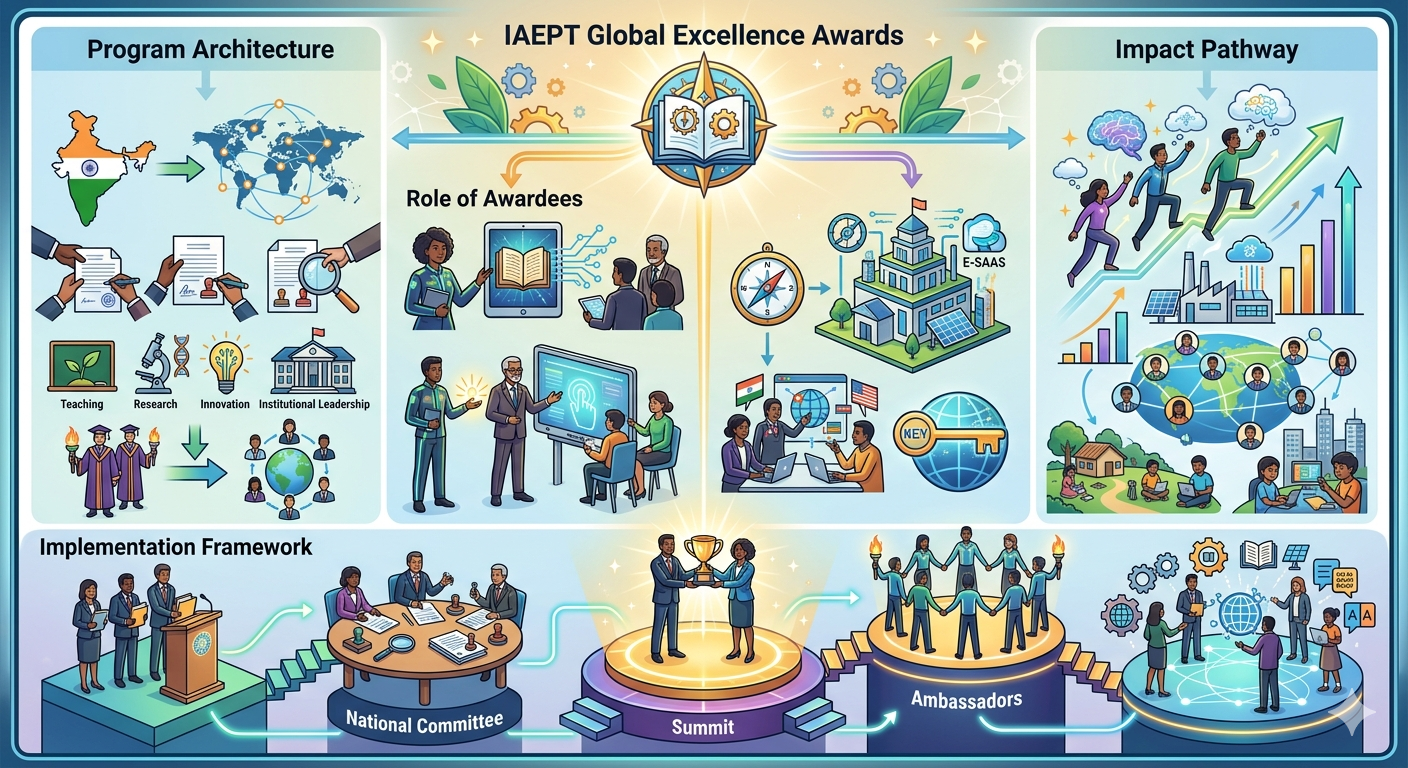
- Launch the IAEPT Global Excellence Awards as a national recognition platform with global reach.
- Identify outstanding educators through institutional nominations and peer review.
- Confer awards across multiple domains of teaching, research, innovation, and institutional leadership.
- Build a distinguished fellowship of academic leaders guiding educational transformation.
- Integrate awardees into the Global Academic Leadership Network.
Awardees will serve as Ambassadors of the Global Academic Renaissance, contributing to:
- Promotion of the Hybrid Method of Education across institutions.
- Mentorship for educators adopting modern pedagogical practices.
- Institutional guidance for hybrid learning ecosystem implementation.
- Collaboration through global academic networks.
- Advocacy for expanding access to knowledge and education.
- Strengthen the intellectual leadership capacity of educators.
- Accelerate adoption of hybrid learning ecosystems supported by E-SAAS platforms.
- Inspire institutional innovation in teaching, research, and academic governance.
- Connect educators through global academic collaboration networks.
- Expand learning opportunities for students across communities.
- Institutional nomination of distinguished teachers and researchers.
- Peer review by a National Academic Evaluation Committee.
- Recognition of awardees during the IAEPT Anniversary Global Academic Summit.
- Formation of the Ambassadors of the Global Academic Renaissance Network.
- Engagement of awardees in educational transformation initiatives.
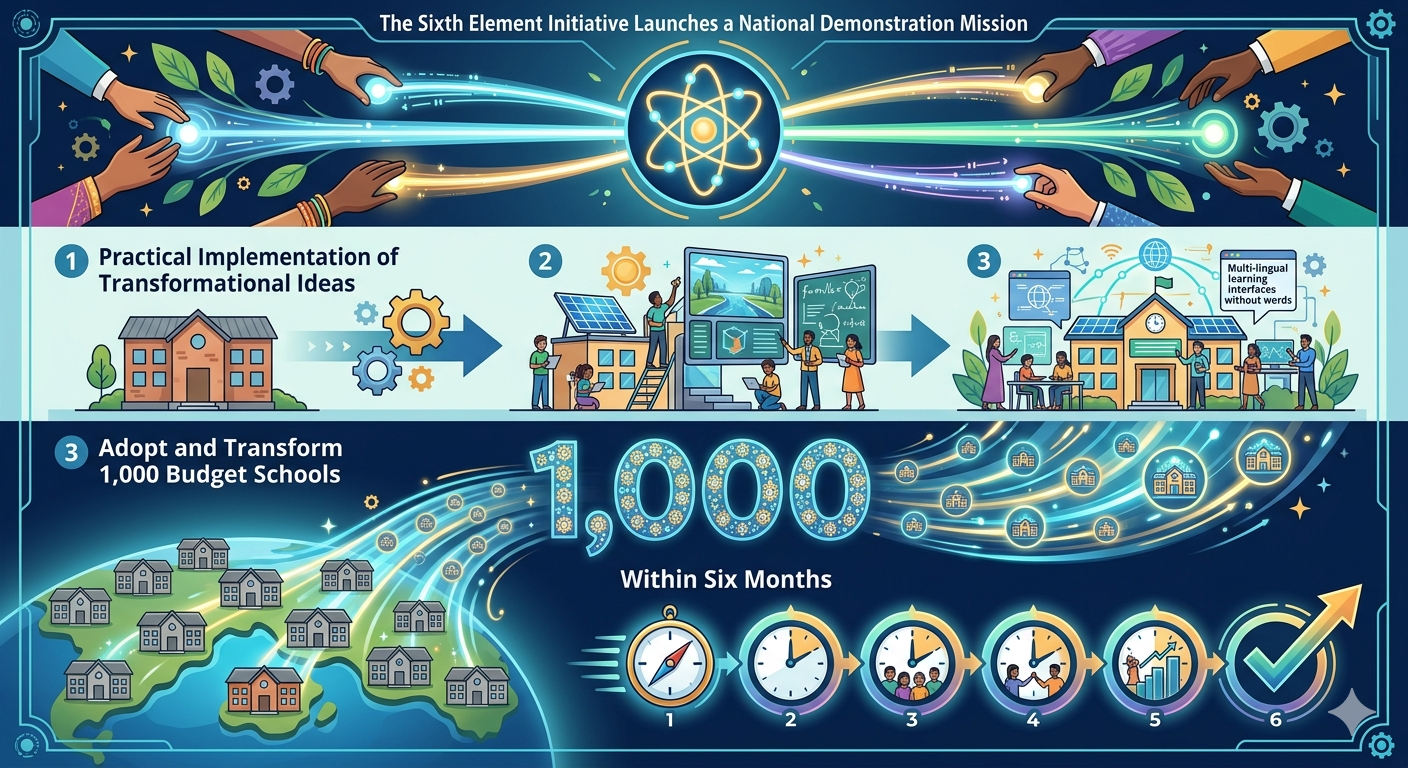
Mission Objective: Adopt and transform 1,000 budget schools through hybrid learning ecosystems within six months.
These schools often serve large student populations with limited resources. Teachers in such institutions frequently demonstrate extraordinary dedication but lack access to modern learning tools. Students in these environments possess enormous intellectual potential yet remain disconnected from global knowledge resources.
The demonstration mission addresses this challenge by introducing hybrid learning infrastructure into participating institutions.
Each participating school will receive:
Through these changes, each institution evolves into a Hybrid Temple of Learning where knowledge flows beyond classroom boundaries.
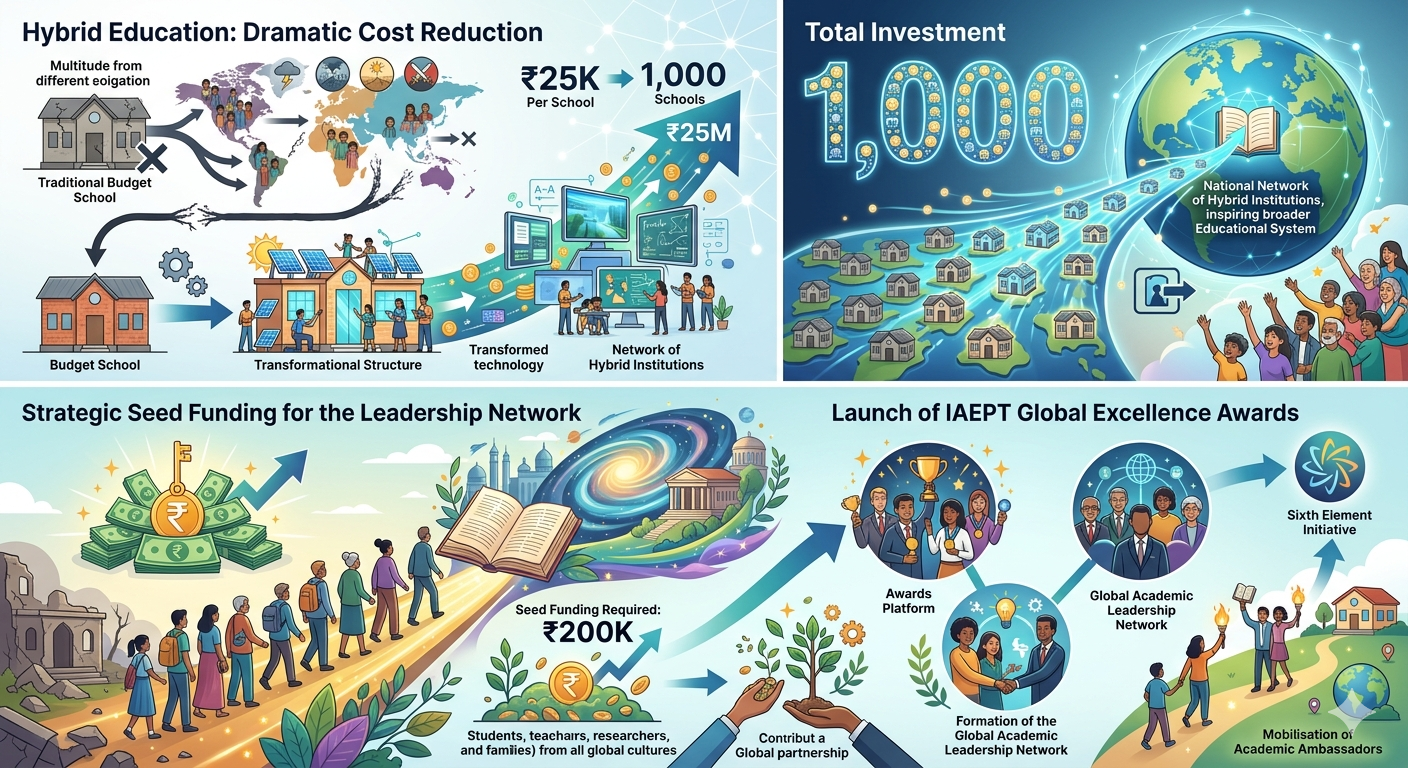
Per School
Estimated cost of transforming one school into a hybrid learning ecosystem.
Schools
Target number of schools to be transformed in the national demonstration mission.
Total Investment
Total investment required to transform 1,000 schools.
This investment creates a national network of hybrid institutions capable of inspiring broader transformation across the educational system.
To establish the Global Academic Leadership Network and launch the IAEPT Global Excellence Awards, an additional philanthropic seed investment is required.
IAEPT Global Excellence Awards — Building the global educator leadership network.
Seed Funding Required
Adopting 1,000 schools — Demonstrating hybrid learning ecosystems at scale.
Investment Required
This mission creates:
- The leadership network required for educational transformation
- The institutional demonstration required to validate hybrid education
- The foundation of a scalable global learning ecosystem
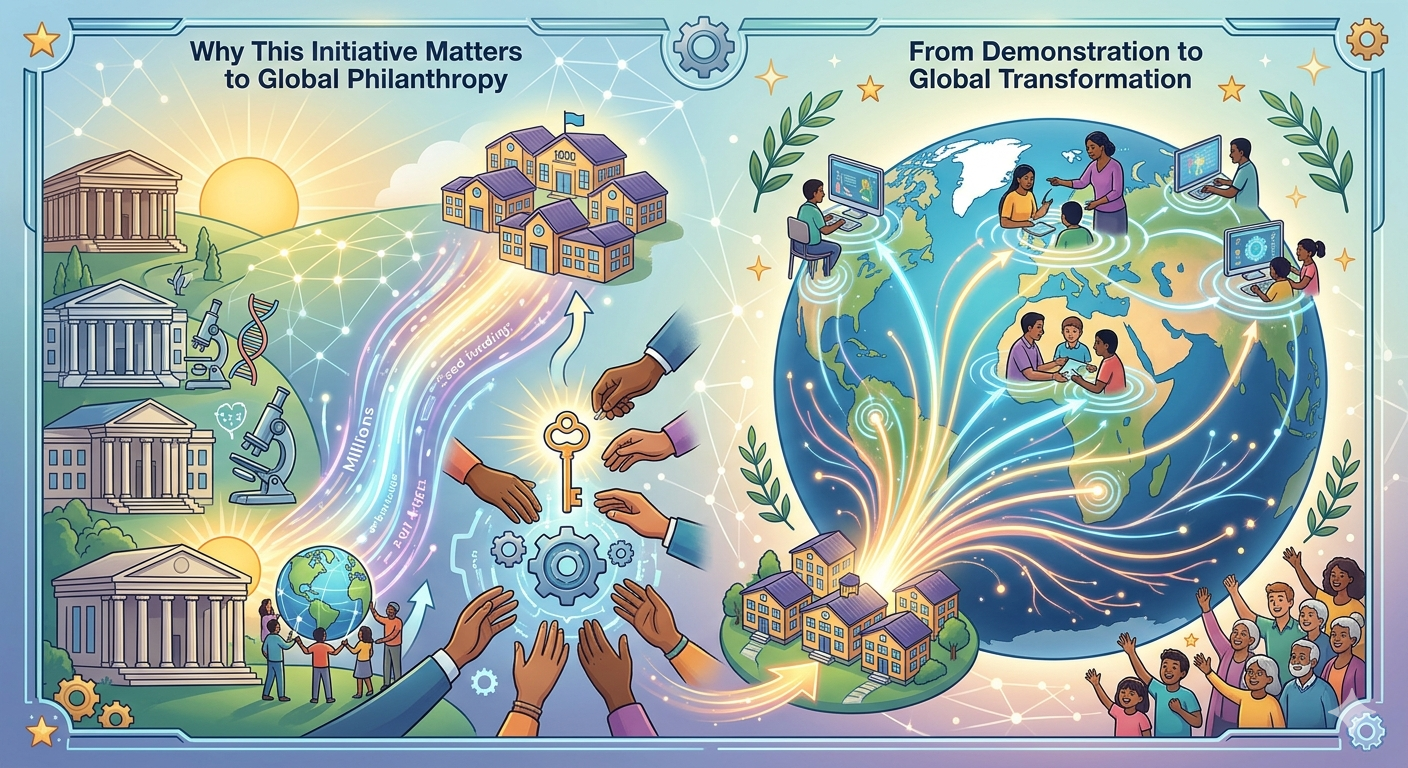
Every generation of philanthropists shapes the future of education.
- Carnegie built libraries that democratised knowledge.
- Rockefeller advanced research institutions.
- Modern foundations have expanded access to global education.
The Sixth Element Initiative extends this legacy into the digital age. It provides philanthropists with an opportunity to participate in building the next generation of Hybrid Method of Education infrastructure. An infrastructure capable of expanding access to knowledge for millions of learners.
- Modernisation of educational institutions
- Empowerment of educators
- Expansion of access to knowledge
- Creation of a global academic leadership network